If you’ve ever thought Pilates isn’t for you because you’re “not flexible enough,” you’re not alone. One of the most common misconceptions people hold about Pilates is that it’s meant only for the already bendy or graceful. The truth? The method was designed to build mobility — not reward those who already have it.
What matters isn’t where your flexibility starts — it’s how your class is tailored to help you improve. From small, focused adjustments to modifications that work with tight muscles, the right program can meet you exactly where you are.
When approached correctly, Pilates can be one of the most effective, low-impact practices for improving mobility, posture, and strength — regardless of current ability. If you’re exploring your options in Los Angeles, the pilates services at Mind & Motion offer a variety of class types, including private sessions, reformer programs, and more adaptable modalities that focus on foundational movement patterns.
Finding the Right Format Makes All the Difference
Stiffness is often the result of limited movement patterns, long-term inactivity, or compensations from old injuries. Trying to jump into the wrong type of class — even if well-meaning — can reinforce frustration or discomfort.
That’s why choosing the right structure matters more than forcing flexibility. Mind & Motion Pilates offers several formats to accommodate different starting points:
- Reformer Pilates provides resistance support and adjustable tension to help guide movements through a fuller range, without strain.
- Pilates Privates are designed for individuals managing chronic tightness, recovering from injury, or simply needing more time and guidance to build awareness.
- Creative Contemporary sessions allow for more exploratory movement and modifications that take pressure off overly stiff areas.
- Jump + Flow may suit those ready for more active cardio-supported sequences once some range of motion is restored.
Each format is guided by trained instructors who are familiar with muscular limitations and how to modify exercises effectively.
You Don’t Have to Stretch to Be “Good” at It
One of the biggest barriers for first-timers is the assumption that Pilates is about looking elegant or moving flawlessly. It’s not.
Pilates is about coordination, not contortion. It’s about connecting breath, core control, and alignment — not about how far you can stretch your hamstrings or how open your hips are.
Those with tight backs, stiff shoulders, or limited hip range often gain the most from classes that help restore movement through repetition, proper sequencing, and muscle engagement in safer positions.
With consistent practice, range of motion tends to improve naturally — not because you’re pushing through stiffness, but because your body is relearning how to move without tension or overcompensation.
What to Expect in Your First Few Sessions
If you’re entering Pilates with significant stiffness, you can expect a learning curve — but not in the way you might think. Much of the early progress comes from:
- Learning where your body is holding tension
- Discovering small muscles that haven’t been activated in a while
- Understanding alignment and how to move more efficiently
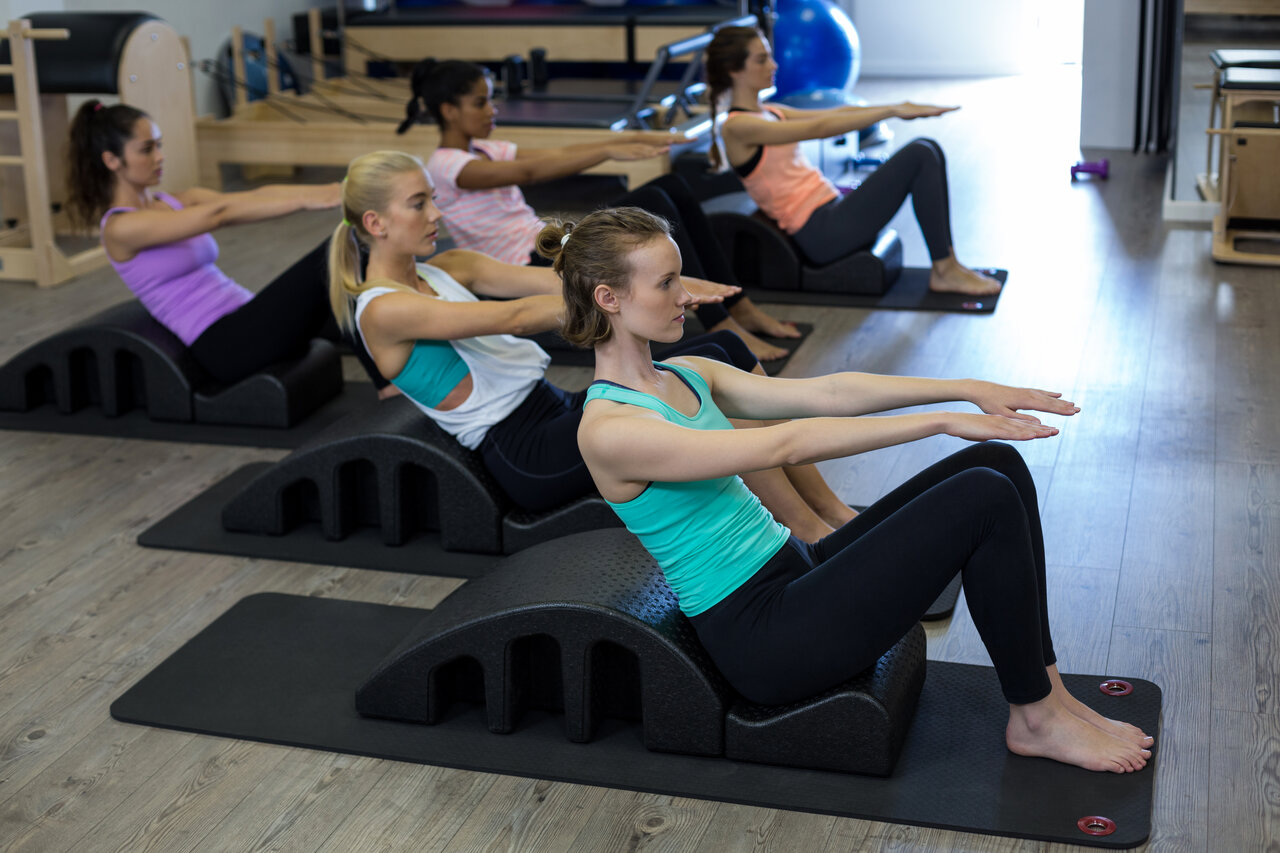
You won’t be expected to perform advanced moves or keep pace with anyone else. Instead, you’ll be guided through gentle corrections, breathing techniques, and support-based movements using equipment like the reformer, Cadillac, or spine corrector.
The pace, especially in beginner-friendly formats like Classical 1.0 or privates, is intentionally slow — allowing time for education and progress without pressure.
How Pilates Improves Mobility Without Overstretching
The key difference in how Pilates improves flexibility lies in its approach. Rather than forcing deep stretches, Pilates encourages movement with active muscle engagement. This allows you to increase range safely while supporting joints and alignment.
Here’s how it works:
| Method | What It Targets |
| Reformer resistance | Builds strength through controlled elongation |
| Breath coordination | Reduces unconscious tension in upper body |
| Core stabilization | Allows safer range of motion in limbs/spine |
| Eccentric muscle training | Lengthens muscles while keeping them active |
| Guided alignment techniques | Promotes symmetry and reduces strain patterns |
This is especially helpful for those who are “stiff” because of seated work, postural imbalances, or old movement habits that limit mobility over time.
You Can Progress Without Pushing Through Pain
One of the most empowering parts of the right Pilates environment is learning that progress isn’t measured by pain or exhaustion. For stiff clients, this means working with your body — not against it.
Rather than being told to stretch deeper or push through limitations, a qualified instructor will adjust your position, reduce resistance, or modify the movement to target your individual range. As comfort grows, so does the potential for advancement.
For example:
- If your hamstrings are too tight for a roll-down, your teacher may use a prop or slight bend in the knees until the full motion becomes available.
- If shoulder mobility is limited, equipment like the wunda chair or spine corrector may be used to support shoulder blades during arm movements.
- If back pain is involved, you may start with more neutral spine work before building toward flexion-based sequences.
Why “Stiff” Movers Often See Fastest Results
Although it might feel counterintuitive, people who identify as stiff or restricted often make noticeable gains in a short period — not because their bodies are suddenly flexible, but because structured movement gives the nervous system a chance to recalibrate.
When you start activating underused muscles and giving overstressed ones a break, your body adapts. With just a few sessions, you might notice:
- Easier posture when standing or sitting
- Reduced discomfort during daily tasks
- A new sense of control and awareness during movement
- Improvements in sleep, breathing, and energy from more relaxed muscles
For these reasons, clients who begin Pilates feeling inflexible often become the method’s strongest advocates. They’ve experienced what’s possible — without needing to be naturally “flexible” to begin with.
Final Thought: It’s About Consistency, Not Capability
Everyone begins Pilates from a different place. Flexibility, coordination, strength — these are skills that develop over time. The right class doesn’t expect you to show up with them, only that you show up.
Mind & Motion offers class formats designed for real bodies, real limitations, and real progress. Whether you’re curious about easing stiffness or ready to build a better foundation for movement, this is a place where feeling “too tight” isn’t a problem — it’s simply the starting point.